Quick Answer
What happens to a reverse mortgage when you inherit an Oahu home?
It becomes due and payable within a set window after the borrower’s death, but heirs are never required to pay more than the home is worth. Federal mortgage insurance caps what’s owed at the lesser of the loan balance or 95 percent of the appraised value, and heirs can pay it off, sell the home, or hand back the keys with no personal liability for the shortfall.
By Aksana Tupalskaya | November 7, 2026
If you just learned that the Oahu home you inherited has a reverse mortgage on it, the first thing to know is that you did not inherit the debt. A reverse mortgage is non-recourse. The loan becomes due when the borrower dies, and the lender’s only recourse is the house itself, never your own bank account or your other assets.
The Clock That Starts the Day the Owner Dies
Most reverse mortgages on Oahu are Home Equity Conversion Mortgages, insured by HUD. The servicer typically has to notify heirs within 30 days of learning about the death, and heirs then have an initial window, usually about six months, to decide what happens next. HUD allows up to two 90 day extensions on top of that if you can show you are actively trying to sell the home or arrange financing, which can stretch the real timeline closer to a year. Nothing about that clock requires you to have the money up front. It requires a decision and some paperwork showing you are moving toward one.
Your Three Real Options as the Heir
You generally have three paths, and none of them puts your own credit or other assets at risk. You can pay off the loan balance and keep the house, often by refinancing into a conventional mortgage in your own name if you qualify. You can sell the house, pay off the reverse mortgage from the proceeds, and keep whatever is left over. Or you can sign a deed in lieu of foreclosure and walk away with no payment due and no mark against you personally, since the loan was never yours.
Why the 95 Percent Number Matters More Than the Payoff Letter
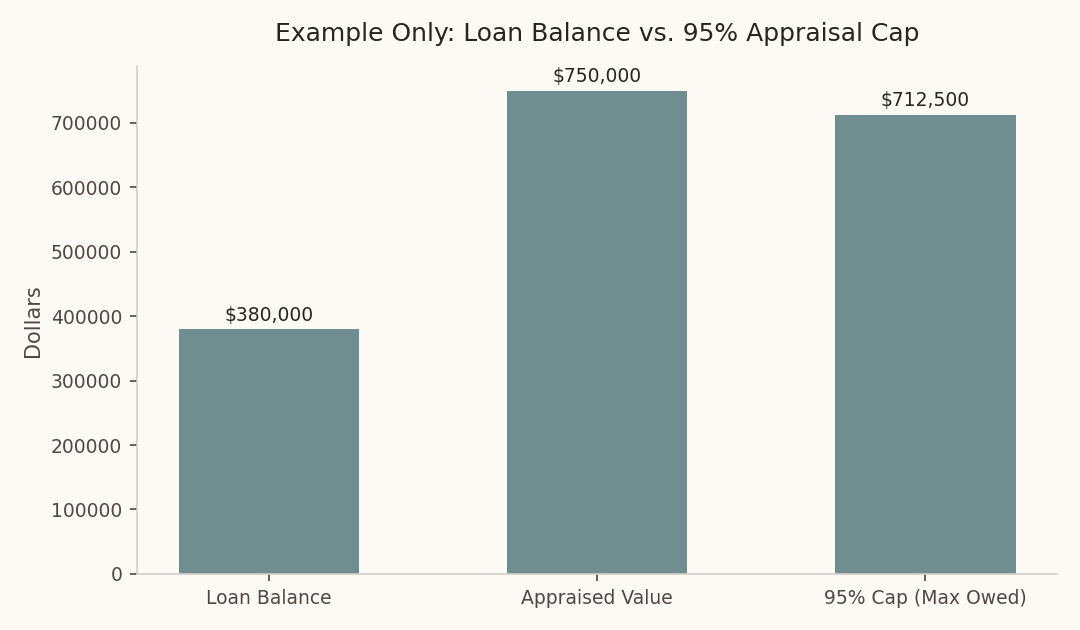
The payoff letter from the servicer will show the full loan balance, including accrued interest and fees. That number can look alarming on an inherited Oahu property, where appreciation often means the home is worth far more than what is owed. But federal insurance on a HECM caps what heirs actually have to pay at the lesser of the full balance or 95 percent of the home’s current appraised value. If the loan has grown larger than the home is worth, which can happen after years of accruing interest, you are not on the hook for the difference. You can satisfy the debt at 95 percent of value and the mortgage insurance covers the rest for the lender.
Picture a typical Oahu scenario: a loan balance of $380,000 against a home that appraises today at $750,000. Ninety five percent of that appraisal is $712,500, well above the balance, so a sale at anything close to market value pays off the loan in full and leaves real equity for the heirs. Now flip it: if the balance had grown to $780,000 against that same $750,000 appraisal, the heirs would still only owe the $712,500 cap, not the full balance.
What HARPTA Does If You Decide to Sell
If you choose to sell rather than keep or walk away, Hawaii’s withholding law still applies the same way it would to any other disposition of Oahu real property. The buyer withholds 7.25 percent of the amount realized unless an exemption applies, and that withholding is separate from paying off the reverse mortgage itself, which comes out of the sale proceeds at closing like any other lien. Heirs living out of state are usually the ones most surprised by this, since they are already managing a payoff letter, a probate timeline, and an unfamiliar market from a distance.
A personal representative or heir handling this from the mainland is exactly who this earlier piece on keeping an inherited Oahu mortgage was written for, and the same practical questions apply here: who is actually on title, what is actually owed, and what is the realistic timeline.
| Option | What It Costs You | What You Walk Away With |
|---|---|---|
| Pay off and keep the home | The full loan balance, often financed with a new conventional mortgage | The house, free of the reverse mortgage |
| Sell the home | The loan balance, capped at 95% of appraised value, paid from sale proceeds | Any equity left over after payoff and closing costs |
| Deed in lieu of foreclosure | Nothing out of pocket | No equity, but also no personal liability for any shortfall |
What this tells me as the numbers agent for Oahu sellers: the payoff letter’s full balance is almost never the real number heirs end up owing, because the 95 percent cap does the protecting, not the sale price you get.
Frequently Asked Questions
How long do heirs actually have after the borrower dies?
The servicer generally must act within 30 days of learning about the death, and heirs then get an initial window, commonly around six months, with up to two 90 day extensions available if you can show progress toward a sale or payoff. That can stretch the full process close to a year.
Can heirs refinance the reverse mortgage instead of selling the home?
Yes, if an heir wants to keep the property, refinancing the balance into a new conventional loan in their own name is one of the standard paths, subject to normal mortgage qualification.
Does the reverse mortgage reduce what the estate has to report in probate?
The loan is a secured debt against that one asset. How it is listed and resolved in a Hawaii probate inventory is a question for the estate’s attorney, since the right treatment depends on the rest of the estate.
What if the home is worth less than the loan balance?
Because the loan is non-recourse, heirs are never required to pay more than 95 percent of the current appraised value. If the home is worth less than the balance, a deed in lieu of foreclosure or a sale at the capped amount both resolve it with no personal liability.
If you are the heir on an Oahu property with a reverse mortgage and you live somewhere else, the nearest thing to a map through the next few months is the free Mainland Seller Guide. It covers the HARPTA withholding, the paperwork, and the remote signing questions that come up at exactly this kind of closing. Get it at islandlivingoahu.com/guide-mainland.