

Quick Answer
Can you stop HARPTA withholding before closing instead of waiting for a refund?
Yes, with Form N-288B, and it has one hard deadline: it must be filed at least ten working days before the transfer date or it will not be approved. The state can then reduce or eliminate the 7.25 percent the buyer would otherwise hold back. Miss the ten days and your only route is getting the money back after closing.
By Aksana Tupalskaya | November 6, 2026
Most out of state sellers hear the word HARPTA for the first time somewhere in the middle of escrow, from escrow. By then the useful window has usually closed, and that is not the seller’s fault. Nobody tells them. So here is the part that is worth knowing a month earlier than most people learn it.
The ten working day deadline, and why it is really two calendar weeks
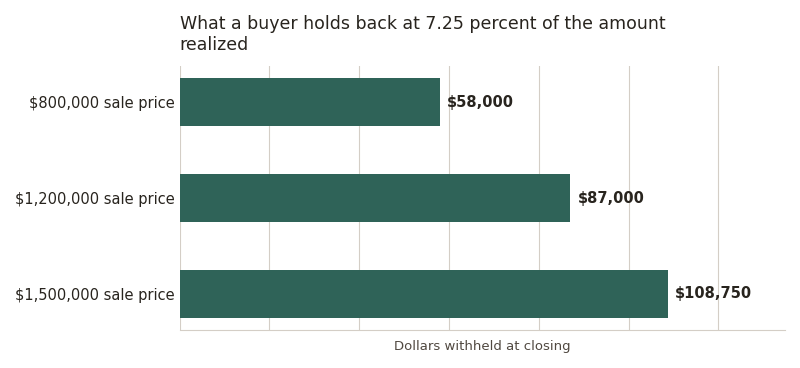
HARPTA is Hawaii’s withholding on sales of Hawaii real property by nonresident sellers. The buyer is required to withhold 7.25 percent of the amount realized and pay it to the Department of Taxation. That is the rate and the mechanism, straight from the Department’s own Tax Facts 2010-1, revised April 2025.
Form N-288B is the withholding certificate. It asks the state to reduce or eliminate what the buyer holds back. The Department’s instructions for the form are blunt about the timing: Form N-288B must be filed with the Department no later than 10 working days prior to the date of transfer. Forms filed later than that “will not be accepted” and are returned to the seller, and the Department “will not approve Forms N-288B after the date of transfer” has passed.
Read ten working days as two full calendar weeks, because working days do not include weekends or state holidays. Then add the time it takes your CPA to assemble the numbers the form asks for. In practice, if you want this to work, the conversation starts before escrow opens, not after.
This is the single most expensive date in an out of state sale, and it is the one nobody puts on the calendar.
| Form | When it is filed | What it does | The deadline |
|---|---|---|---|
| N-288B | Before closing | Asks the state to reduce or eliminate the withholding | At least ten working days before the transfer date |
| N-289 | Given to the buyer at or before closing | Claims an exemption so nothing is withheld in the first place | Before the buyer remits the withholding |
| N-288C | After closing | Requests a tentative refund without waiting for your return | After the transfer, once the withholding is paid |
| Hawaii income tax return | The following filing season | Reconciles what was withheld against what is owed | The normal return deadline |
What this tells me working with sellers from out of state: three of these four are filed after the outcome is already set, so the only date worth putting on a calendar is the ten working days.
One thing to settle before you read further, because it is a different question: this post is about the N-288B deadline and whether the state will grant it. If what you actually need to know is which of the two forms your sale needs in the first place, N-289 for a full exemption or N-288B for a reduction, start there and come back here for the timing.
The two grounds the state will actually accept
N-288B is not a hardship form and it is not a negotiation. The Department’s instructions give two grounds: a claim that the seller will not realize any gain on the transfer, or a claim that there will be insufficient proceeds to pay the withholding required. That is the whole list.
Which means the form turns on one word, and the word is gain. Gain is not equity, and conflating the two is the most common error I see. The Department defines gain as the excess of net sales proceeds over the adjusted basis of the property. Equity is what is left after the mortgages and liens are paid. Its own worked example makes the point better than I can: a taxpayer buys a condominium for $100,000, refinances to a $300,000 mortgage, and sells for $300,000 with a $295,000 balance. No equity at all, and a capital gain of $203,182.
That seller walks away from the table with almost nothing and still has a gain, so the no gain ground does not apply. The insufficient proceeds ground might. Those are two different applications with two different outcomes, and the difference is worth a call to a CPA rather than a guess.
The route that is not on this form at all
There is a third way to end up with nothing withheld, and it is worth knowing before you spend two weeks of runway on an N-288B you may not need, because it does not run through this form at all.
Hawaii exempts a sale outright when two things are both true: the property was used by the seller as a principal residence for the year preceding the date of the transfer, and the amount realized does not exceed $300,000. Both conditions, not either one. That exemption is claimed on Form N-289, the certification the seller signs and hands to the buyer, and the buyer keeps it rather than filing it with the Department. Source: Hawaii Department of Taxation, Tax Facts 2010-1, revised April 2025.
Why it belongs on this page is the timing. The N-289 exemption carries no ten working day deadline. N-288B has to reach the Department at least ten working days before the transfer date or it will not be approved, which is the whole subject of this post. An N-289 certification simply has to be in the buyer’s hands before the buyer remits the withholding. If you qualify under this exemption, the deadline that governs everything else here never applies to you.
The trap is the word and, and it catches most of the mainland sellers who ask me about this. A seller under $300,000 who has been renting the place out from the mainland does not qualify, because it was not their principal residence for the year before the sale. A seller who lived in it right up until closing but sells at $450,000 does not qualify either. And amount realized is generally the contract price, not your equity and not your gain, so a large mortgage does not pull a sale under the threshold. On Oahu that second condition is the binding one far more often than the first.
The trap inside the federal home sale exclusion
Here is the one that catches people who have done their homework. Hawaii conforms to the federal home sale exclusion, $250,000 filing single and $500,000 married filing jointly. Sellers reasonably assume that if their gain lands under the exclusion, the withholding goes away.
The interaction is sharper than that. If any gain remains after the exclusion is applied, the no gain ground for N-288B is gone, and the full 7.25 percent is withheld anyway. Partly excluded is not the same as excluded. I put this in my mainland seller guide because it is the detail that changes what a seller should do, rather than just what they should know.
A few related points worth having in one place. Short sales and foreclosures are still dispositions, so the withholding still applies, and N-288B is often the right tool there because the proceeds genuinely are insufficient. Transfers by bequest are among the nonrecognition provisions Hawaii conforms to, but the seller must still give the buyer Form N-289. And the amount realized that the 7.25 percent is calculated on is generally the sales price, not your equity and not your gain, which is exactly why a seller with a large mortgage can be the one most affected.
If the window has already closed on your sale, you are not out of options, you are just on the slower path. Here is what the refund route actually looks like, including the form that asks for a tentative refund without waiting for your return. And if you are selling from outside the United States rather than from another state, FIRPTA and HARPTA both apply, which I covered in this post.
None of this is tax advice and I am not a CPA. Your CPA or tax attorney should confirm which form fits your sale and whether you have recognized gain. My job is to make sure the calendar is right, because the calendar is the part a real estate agent can actually protect.
Frequently Asked Questions
What exactly is the N-288B deadline?
At least ten working days before the date of transfer. The Department’s instructions say forms filed later will not be accepted and will be returned, and that it will not approve an N-288B after the transfer date reported on the form has passed.
Is there an exception for a sale under $300,000?
Yes, but it is narrower than it sounds and it is not claimed on this form. Hawaii exempts the sale when the property was used by the seller as a principal residence for the year preceding the transfer date and the amount realized does not exceed $300,000. Both have to be true. It is claimed on Form N-289, the certification given to the buyer, not on Form N-288B, and unlike the N-288B it carries no ten working day deadline. Amount realized is generally the contract price rather than your equity, so a mortgage does not bring a higher-priced sale under the threshold.
Is 7.25 percent taken out of my profit or out of the sale price?
Out of the amount realized, which is generally the sales price. That is why the withholding can exceed what a seller actually nets on a highly mortgaged property, and why the insufficient proceeds ground for N-288B exists at all.
If my gain is under the federal exclusion, am I exempt?
Not automatically. If any gain remains after the exclusion is applied, the no gain ground for N-288B does not apply and the full 7.25 percent is withheld. Confirm your own numbers with a CPA before assuming either way.
Who files the form, me or escrow?
The seller files it. The Department returns the approved or disapproved form to the seller, who then transmits it to the buyer. Escrow is not going to do this for you, and a buyer cannot withhold less than 7.25 percent without that approved certificate in hand.
If you live somewhere else and you are selling Oahu property, the withholding and the deadlines are the part nobody warns you about. I put the whole sequence in writing, the 7.25 percent and what it is not, this ten working day rule, 1031 and boot, remote signing, and a pre-listing checklist, at islandlivingoahu.com/guide-mainland. Read the ten working day chapter first.